 English
 عربى
Sourcing Cordless Power Tools: What Separates a Factory From a Reseller Battery platform, torque ladder, and regional couplings decide whet...
READ MORE
A product manager from a European tool importer lands in Ningbo with a 21V brushless impact wrench specification: 470 N·m of torque, two 4.0 Ah batteries, a compact head. Three factories quote comparable numbers within a week. Only one holds that torque consistently across a 5,000-unit run, accepts a private-label housing colour, and still loads the container before the peak-season shipping crunch. That gap between a quotation and a partnership is what cordless power tools OEM evaluation is really about.
For importers and brands, the decision is not about buying tools at factory prices. It is about renting a factory’s engineering, quality system, and supply chain to build products that carry your name. A genuine OEM partner brings several layers: platform design, series rationalisation, regional compliance, packaging, and after-sales support. Catalogues show the endpoint; a factory audit reveals the journey.
FLONPRO, the export brand of Ningbo Tongque Machinery, operates a roughly 10,000-square-metre manufacturing facility near Ningbo Port. With 15 years in power tools and steady exports of US$5–10 million per year, it sits in the mid-sized manufacturer category — large enough to handle container orders, small enough to treat each project as a priority. The conclusion is straightforward: platform depth, not brochure photography, determines how much value an OEM buyer receives.
The smartest cordless power tools OEM projects begin with a single voltage platform and then expand across use cases. FLONPRO’s 21V brushless architecture supports a dense family — impact wrenches, impact drivers, drills, angle grinders, reciprocating saws, circular saws, blowers, and task lights — all sharing battery and charger ecosystems. One platform means one supply chain for cells, one charger design, and one spare-parts story for your distributors.
Torque grading shows how far a platform can stretch. The impact wrench line alone spans 350, 470, 600, 700, 1,000, and 1,300 N·m, covering car maintenance, industrial assembly, and heavy-equipment service. When a customer requests a 700 N·m model for truck repair, the factory already knows the housing geometry, motor winding, and impact mechanism needed. Series-based design shortens lead times and reduces the risk of defects that plague first-generation products.
Before comparing price lists, ask how many models share the same motor mount and battery interface. For a deeper look at how torque ratings translate into workshop reality, see our guide to brushless impact wrench power versus real fastening jobs.
Most importers are not searching for one SKU; they are building a catalogue — cordless drills for DIY shelves, high-torque wrenches for garages, concrete vibrators for construction rental, and hand tools for the same retail display. Consolidating these lines at one factory simplifies auditing, quality follow-up, and container loading. FLONPRO’s product architecture is organised around job-site logic rather than isolated inventions.
| Category | Representative Products | Typical OEM Buyer |
|---|---|---|
| Cordless power tools | Impact wrenches, drills, saws, grinders | Tool brands, e-commerce sellers |
| Corded power tools | Rotary hammers, demolition hammers, mixers | Construction distributors |
| Concrete vibration | Vibrator motors, pokers, portable drives | Equipment importers, rental fleets |
| Hand tools | Sockets, screwdrivers, levels, cutters | Retail chains, hardware wholesalers |
The commercial logic is simple. One factory order covering a 21V drill and a 1,200 W rotary hammer means one purchase order, one quality audit, and one freight consolidation. For the supplier, deeper production runs strengthen purchasing power for components. Both sides win on unit cost.
A socket set beside a cordless impact wrench, or a spirit level beside a drill, gives trade customers a complete workflow. FLONPRO includes hand sockets, screwdrivers, levels, wire strippers, and PVC pipe cutters in the same catalogue, so one more item can be sourced without a second supplier audit.
OEM buyers are not purchasing individual tools; they are purchasing a defect rate across thousands of units. FLONPRO’s quality approach runs from raw materials through finished goods, with the stated goal of “empowering operators and extending machine life.” For cordless tools, that translates into specific checks:
An OEM partnership is not a purchase order. It is a shared risk structure: the factory owns design and production, the brand owns market trust. Process transparency matters more than a handsome showroom.
Info A credible OEM factory should show you its motor-winding station, battery assembly line, and final torque test rig. If the tour stops at the samples wall, treat the catalogue with caution.
Beyond production, ask about traceability. Can the factory identify which batch of battery protection boards went into a specific production week? That level of record-keeping becomes critical when a field failure appears months later — the difference between a quick replacement programme and a reputation crisis.
One global catalogue is rarely enough. A cordless power tools OEM factory that understands regional interfaces earns more trust from local distributors. FLONPRO’s concrete vibrator range demonstrates this clearly. The factory builds Chinese-type, Indonesian-type, Japanese-pin-type, Korean-pin-type, and Malaysian 2-claw-type coupling variants, with differences in joint geometry, needle dimensions, and hose assemblies.
Warning If your target market uses Japanese pin-type quick couplings and the factory only knows the Chinese standard, the entire customer experience fails — regardless of how good the motor is. Confirm interface compatibility before sampling.
This regional thinking extends beyond concrete equipment. A 21V cordless drill for the European DIY market may require a different chuck specification than one destined for Southeast Asian construction sites. OEM buyers should therefore evaluate the factory’s willingness to adapt, not just its ability to reproduce a reference model.
Production capability matters little if ocean freight turns a six-week lead time into twelve. FLONPRO’s location near Ningbo Port and Shanghai Port is a structural advantage. Ningbo is one of the world’s busiest container ports, with frequent sailings to Europe, North America, and the Asia-Pacific region. For buyers, shorter inland haulage lowers trucking cost and makes schedules more predictable — especially during peak seasons when port space becomes the real bottleneck.
Success A factory exporting US$5–10 million annually has established freight arrangements and documentation routines. That experience shows up in clean bills of lading, accurate commercial invoices, and fewer customs delays.
No importer should place a large-batch order before seeing production-level samples and auditing the line. The sequence below reflects how professional tool buyers de-risk a first collaboration.
Danger Be cautious of factories that only quote “standard models” and refuse specification changes. Cordless power tools OEM is a customisation business; a rigid factory becomes a long-term liability.
At its best, a cordless power tools OEM partnership creates a short feedback loop: field performance data flows back from your market, and the factory turns it into better torque curves, sturdier housings, or safer battery management. That loop transforms a manufacturing relationship into a product advantage. FLONPRO’s combination of 15 years of tool engineering, a 10,000-square-metre plant, regional specification capability, and port-side logistics gives importing brands a coherent answer to the question most buyers forget to ask — not just “can you make it,” but “can you keep making it better.”
 Chinese type Internal concrete vibrator poker
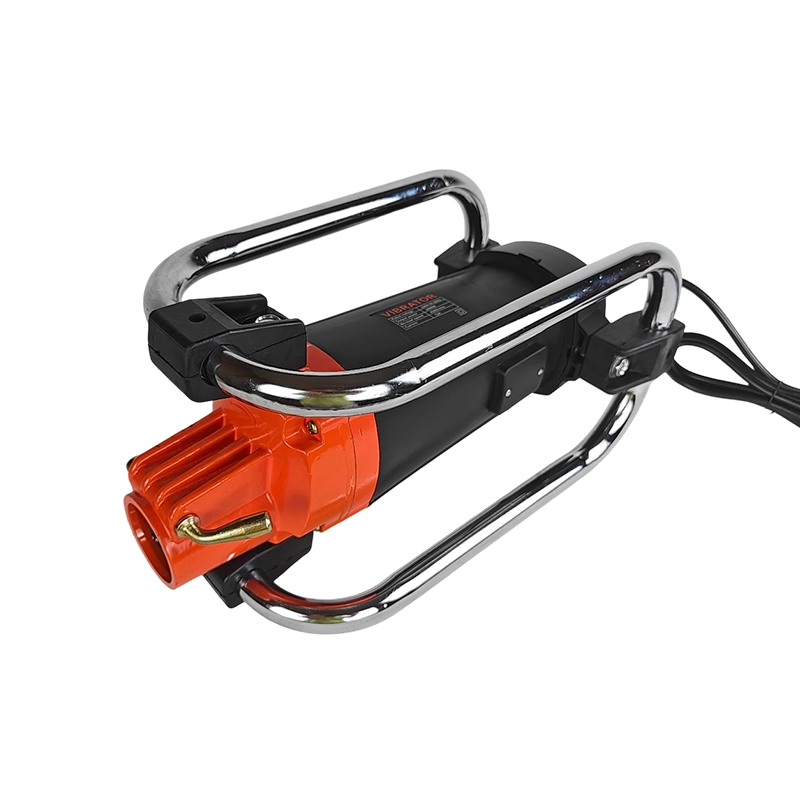 2KW Handheld Electric Concrete Vibrator Drive Unit with Chinese Quick Coupling (4300 RPM for Pendulum Shafts)
 GQ-V03 21V Cordless Concrete Vibrator
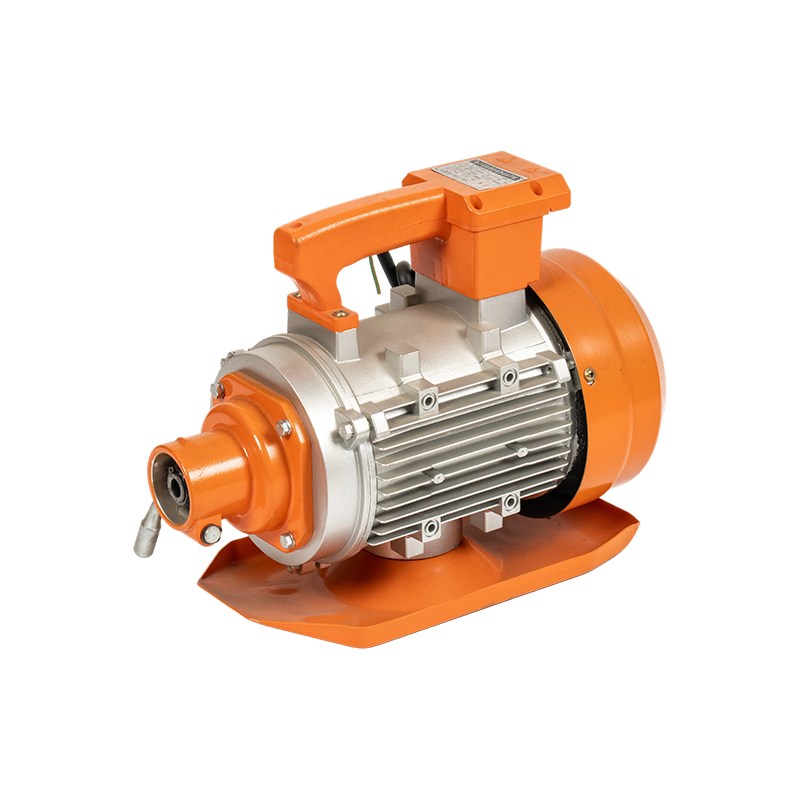 GQ-M02 High Frequency Electric Internal Concrete Vibrator
 Korean Pin Type Concrete Vibrator Poker
 Indonesian Type Concrete Vibrator Poker
Sourcing Cordless Power Tools: What Separates a Factory From a Reseller Battery platform, torque ladder, and regional couplings decide whet...
READ MOREThe Brushless Cordless Impact Wrench Advantage Quiet, powerful and remarkably precise, a brushless cordless impact wrench makes heavy faste...
READ MORECORDLESS IMPACT WRENCHES · BUYER'S FIELD GUIDE Cordless Impact Wrenches: Match Torque to the Job, Not the Hype A practical guide for repai...
READ MORE
Ready To Customise Your Products?

We are a professional machinery manufacturing enterprise integrating R&D, production and export. With stable product quality and strong export capabilities, we have established a good brand reputation in the global cordless and corded power tools market.
Quick Links
Contact Us
Telephone:
+86-138 6780 0831
+86-137 3610 1054
Email:
jacky@flonpro.com
Lucy@flonpro.com
Company Address
No. 88, Meiyuan Industrial Zone, Yinjiang Town, Haishu District, Ningbo, Zhejiang, China
